The second edition of our Learning from Artists series explores sensory art practices that move away from human-centric towards more-than-human perspectives. Highlighting works by the Art Senses open call applicants who earned special recognition, we look at how sensory experiences can foster new ways of relating to diverse living forms and invisible, life-sustaining ecological systems.
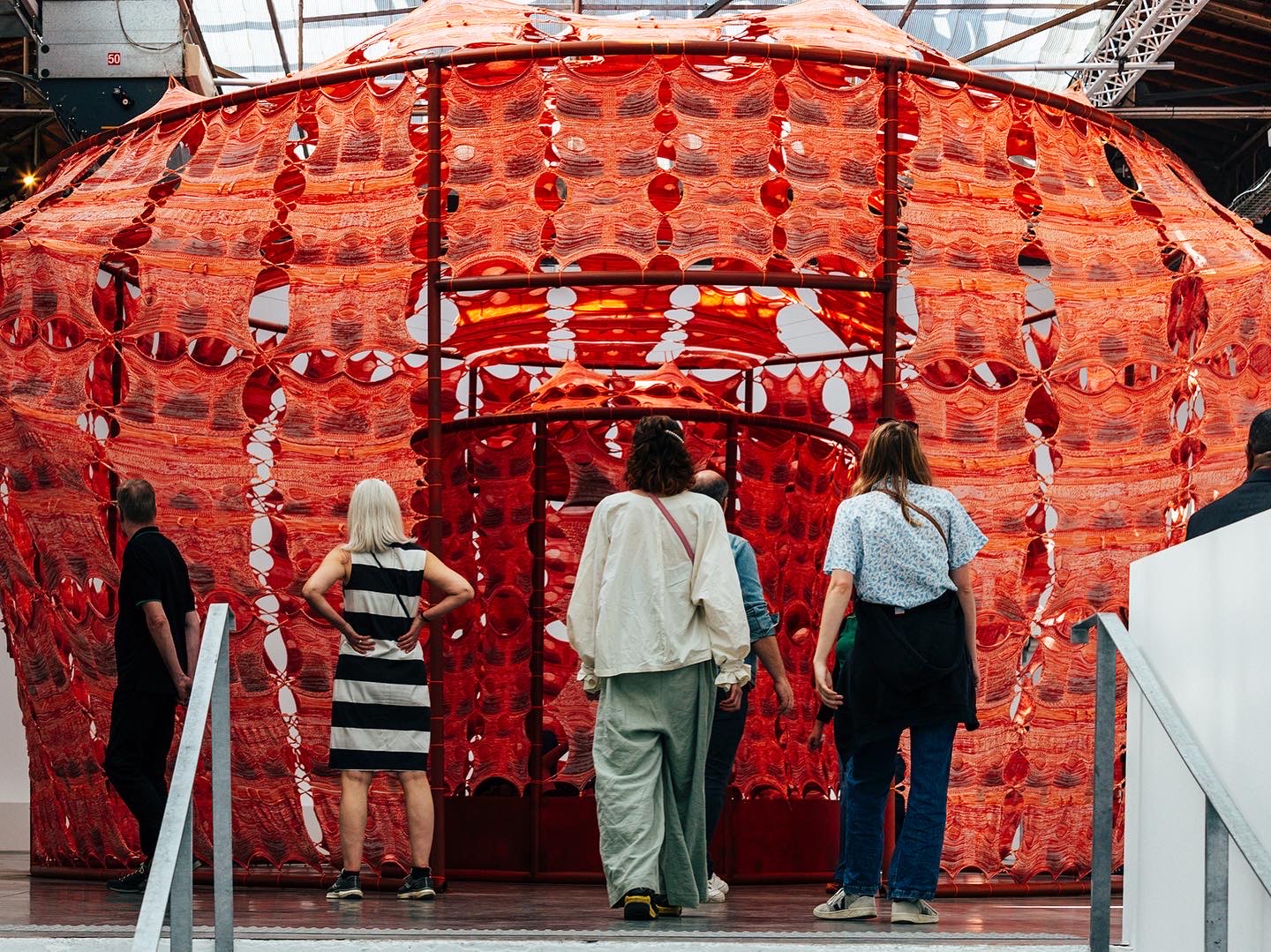
What would it mean to sense the world not solely through human perception, but through a broader awareness attuned to water, wind, plants, animals, and microorganisms? As ecological crises continue to reveal the limits of human-centred thinking, a growing number of contemporary artists are developing practices that invite us to experience the world through more-than-human perspectives. Sensory art has become a particularly fruitful field for these explorations. Rather than treating nature as an object to be observed, these works engage various senses while positioning humans within a complex network of living beings, environmental factors, and invisible processes.
Coined by David Abram in his 1996 book The Spell of the Sensuous: Perception and Language, the term "more-than-human" challenges long-held anthropocentric view by acknowledging that the human world is embedded within, permeated by, and dependent upon the more-than-human world that exceeds it. Over the past years, the term has proliferated across fields including natural sciences, philosophy, anthropology, and the arts, notably spearheaded by thinkers such as Donna Haraway and Anna Lowenhaupt Tsing, to describe the entangled multispecies histories and kinship shared by the many forms of life on our planet. Contemporary artists are increasingly translating these ideas into sensory experiences that allow the audiences to encounter ecological interdependence not only intellectually but also viscerally.
Communing with the More-than-Human
Artist and medicinal architect Yussef Agbo-Ola explores these perspectives in his multidisciplinary practice that interprets natural energy systems through interactive experiments. Exploring how art, architecture, and research shape our experience of geological and ecological systems. he creates environmental contemplation spaces, experimental sound works, and haptic art that reimagine multispecies relationships.


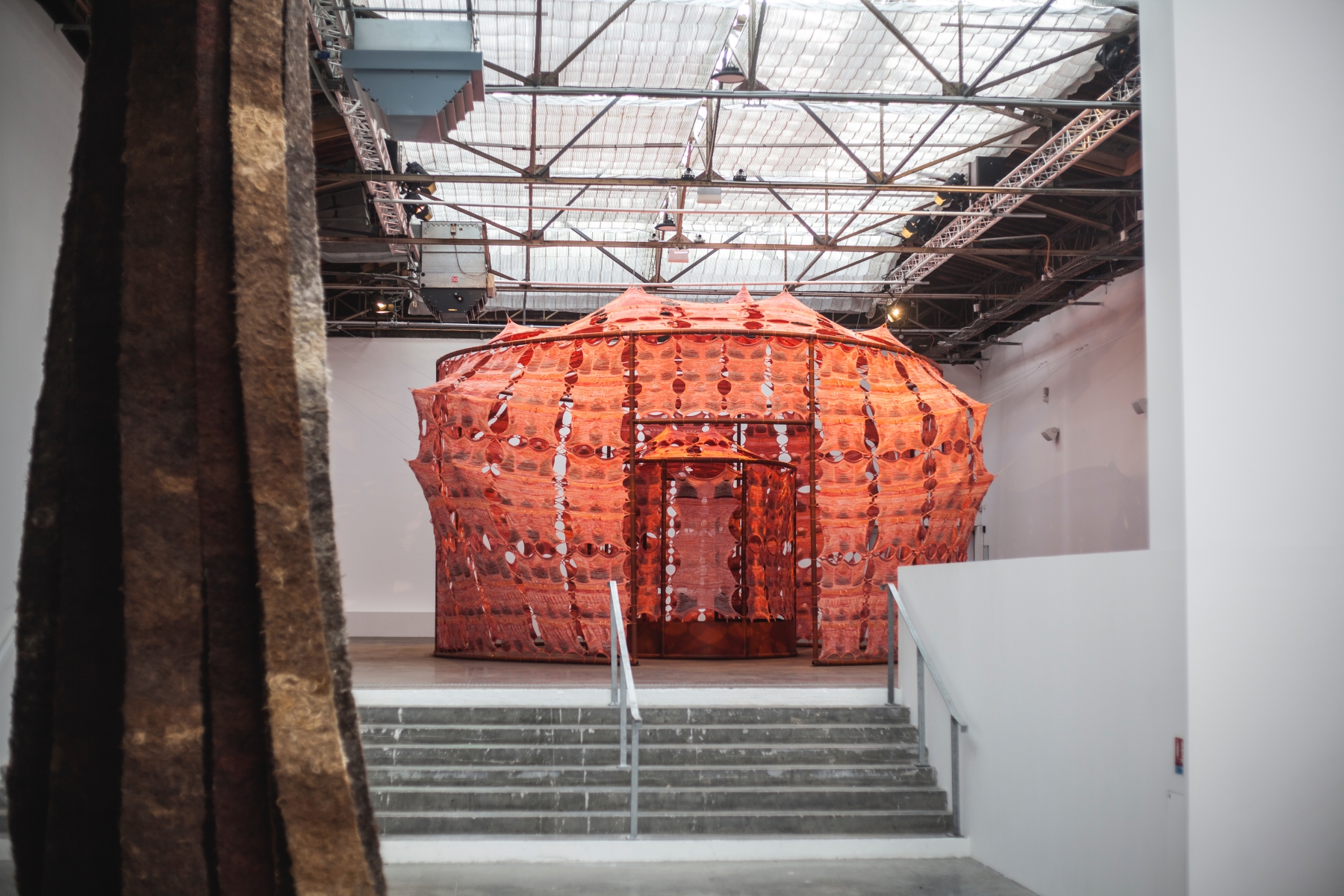


His installation NONO: Soil Temple is conceived as a spiritual entity and a sanctuary dedicated to the healing power of soil. Inspired by the microscopic worlds beneath our feet, this altar invites the visitors to energise the soil through chanting, dancing, and praying, while simultaneously surrendering to what Agbo-Ola describes as being “mothered by the womb of the Earth." Rather than provoking contemplation, the work invites an embodied encounter with the ground that sustains all terrestrial life. Accompanying the installation is Soil lungs in iron ash, a sonic piece inspired by the manifold conversations between the botanical, geological, microbial, and invisible entities within the soil ecosystem.
Where Agbo-Ola reveals the hidden multispecies workings of the soil, Jamie Pazmiño turns her attention to the wind as an invisible collaborator. Through her artistic practice, the artist imagines multispecies futures that are grounded in reciprocity and positions herself as a portal through which non-human perspectives can be amplified. Collaborating with an ever-growing number of beings, she allows environmental conditions and chance to shape each piece.
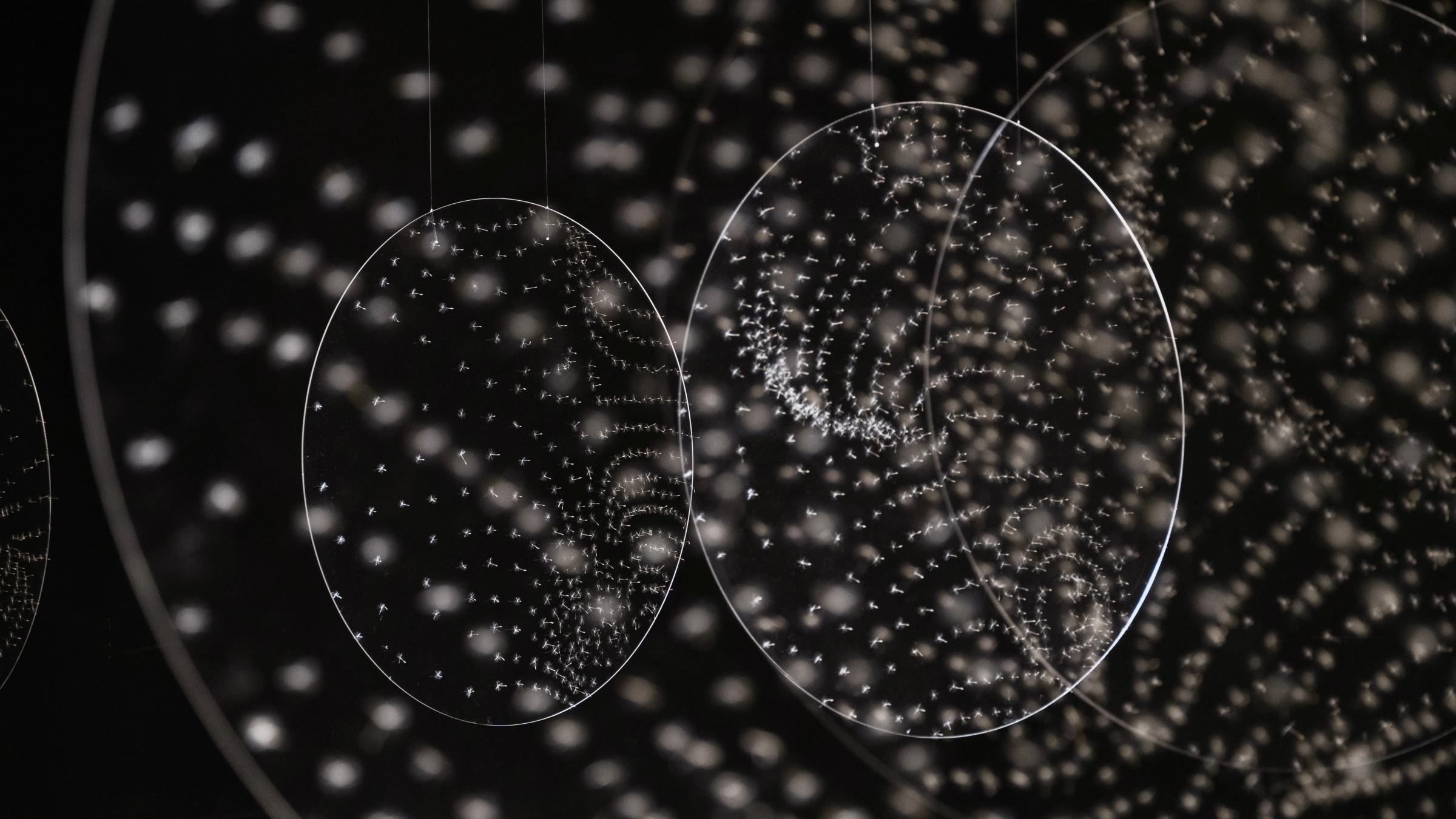
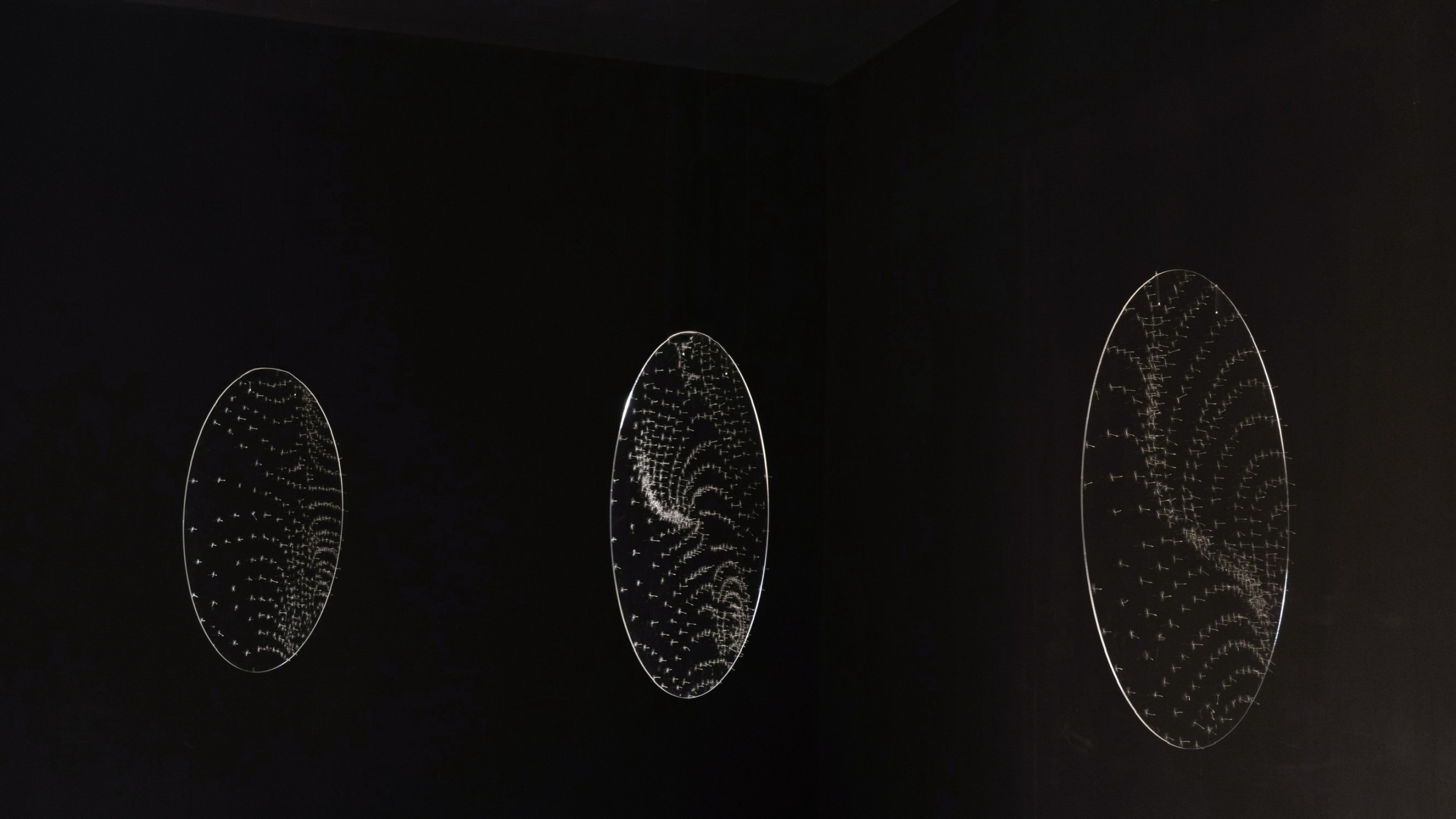
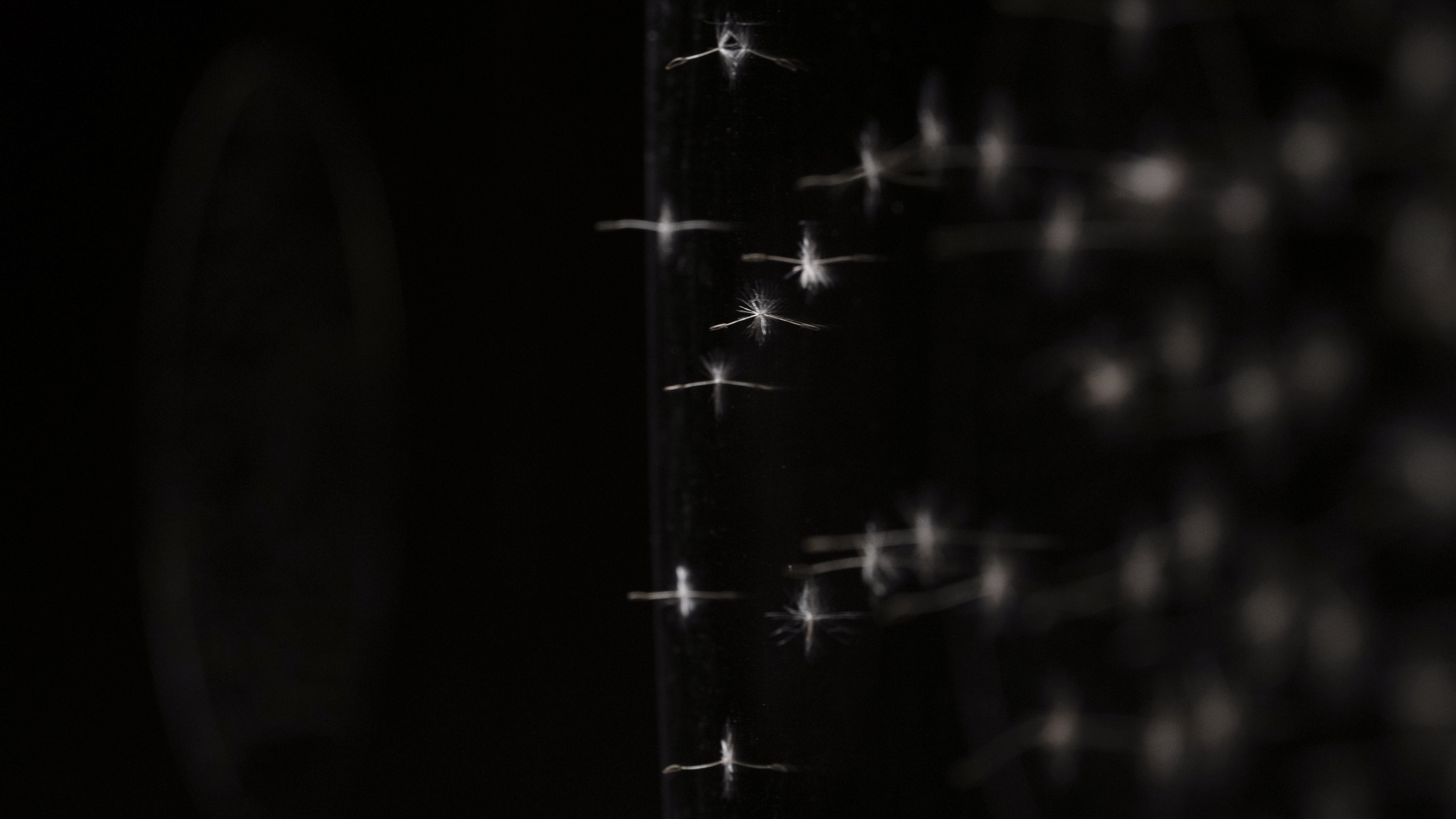
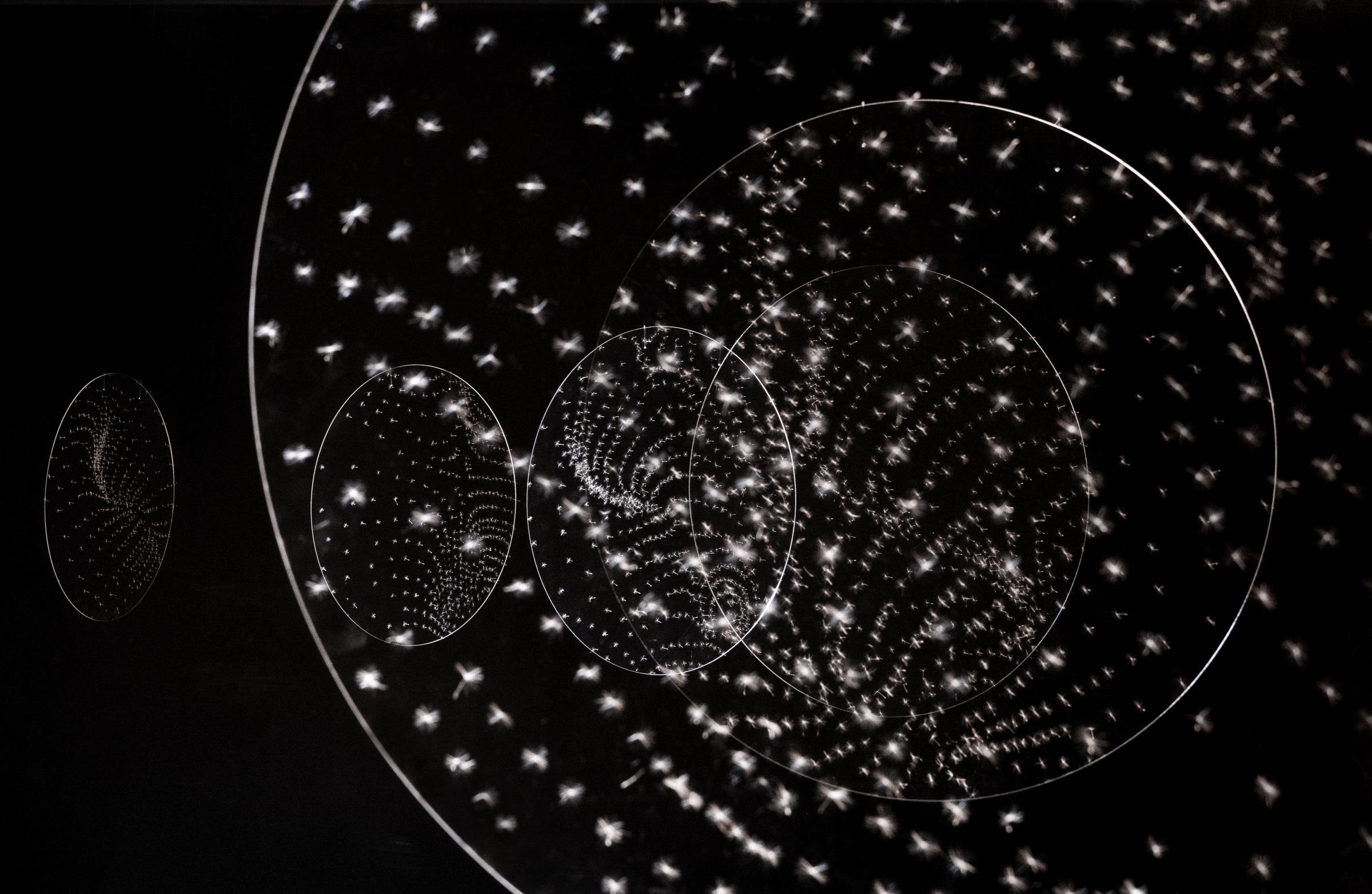
Pazmiño’s work In Alea: Wind Diary lists its creators as "the Wind, the Dandelion, Jamie, the Air, the Soil". Exploring multitemporality through randomness, it centers on wind, a fundamentally unpredictable phenomenon, and dandelions, whose life cycle is shaped by its invisible forces. The installation begins with empty acrylic circles, which are gradually filled over the exhibition period. Across 12 days, the artist uses the exhibition site's GPS coordinates to extract the day's wind pattern and spends six to eight hours “drawing” it with dandelion seeds. By asking visitors to remain with subtle transformations, the work cultivates sustained attention while opening a space for attuning to non-human agencies.
Mia Milgrom similarly explores relationships between human and more-than-human worlds through gradual transformation. Informed by the tension arising in unstable environments, shifting systems of support, and the increasingly strained relations between human and nonhuman worlds, her work highlights interconnected scales, from microscopic interactions to global chains of events. She asks: How can we grow symbiotically amid ecological crisis, expansive politics, and ruptured material resources? And how might this shape how we create and share collective knowledge?

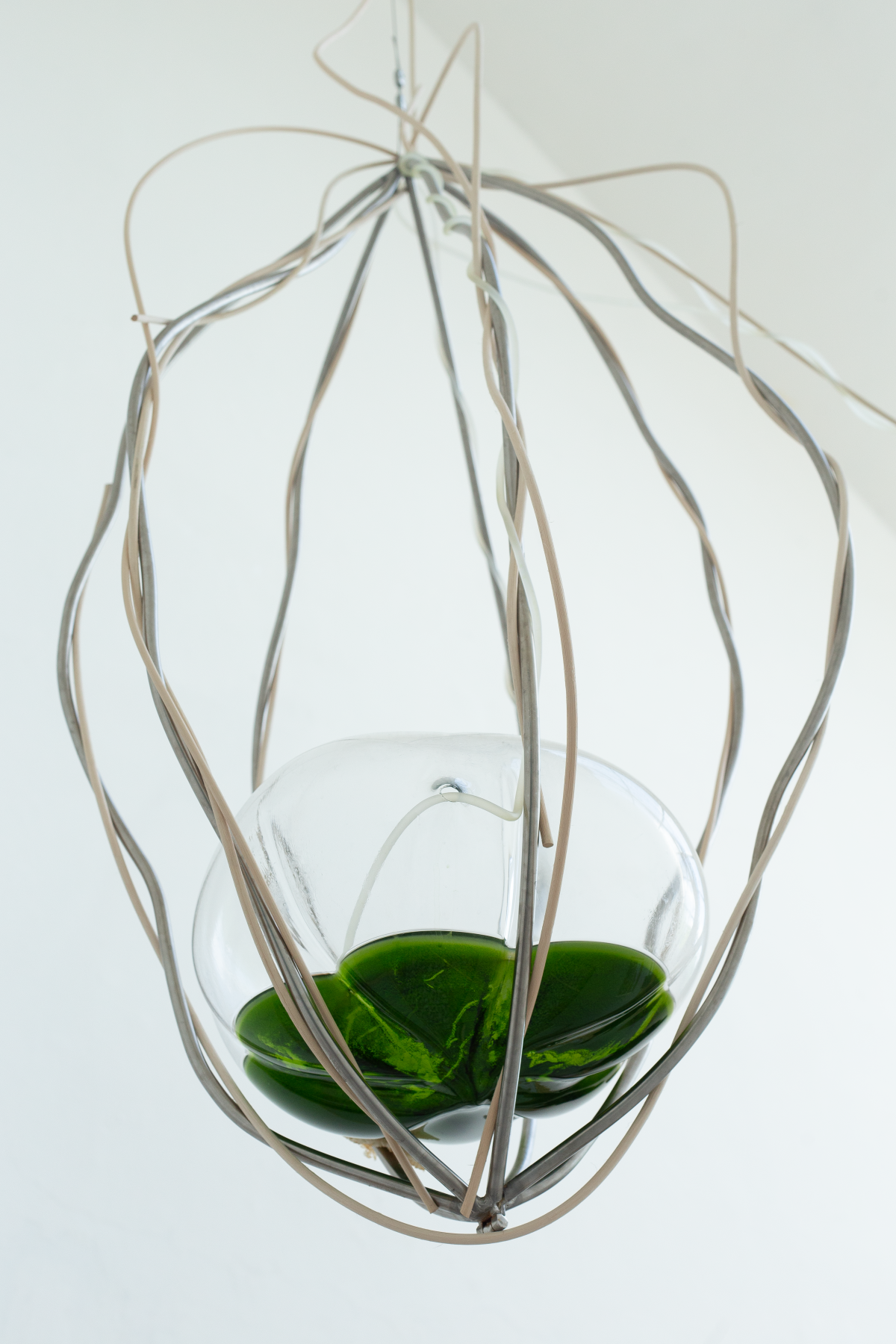

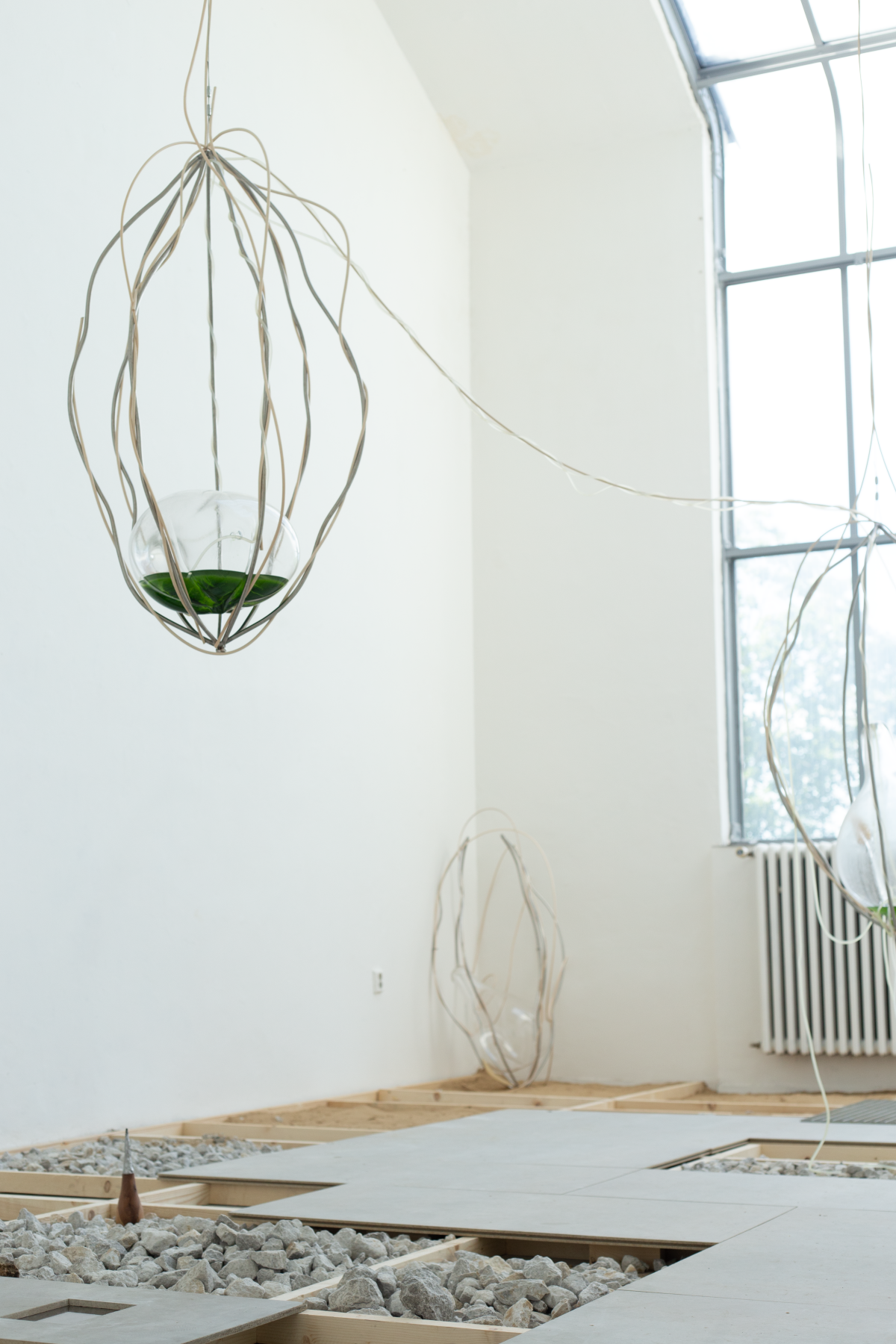
These questions come into focus in works such as Undercurrents, where natural filtration systems become a metaphor for both environmental contamination and the personal process of absorbing grief. At its centre are tear-shaped sculptures made of glass and stainless steel, suspended within a site-specific installation that creates a layered landscape, revealing the geological strata through which water naturally filters. Woven throughout the installation is the slow circulation of green microalgae that break down pollution, evoking symbiotic cycles, water crises, and their associated physicality. Through these living materials, Undercurrents reminds us that ecological and emotional processes are never separate but flow through the same interconnected systems.
From Listening to Reciprocity
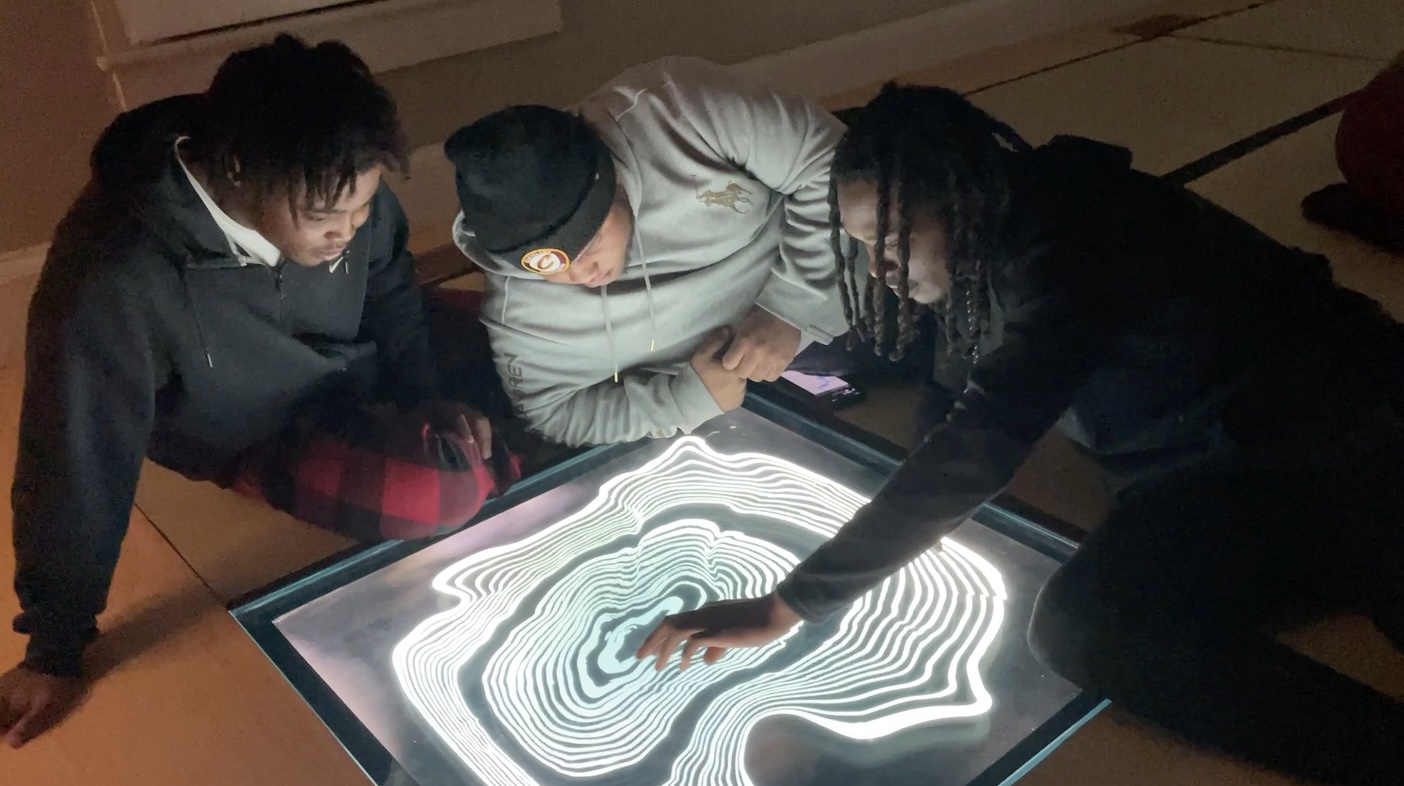
Cadine Navarro’s recent work explores interconnectedness, with food, seeds, and land stewardship as central through-lines. In It Sounds Like Love, an installation centred on the sound vibrations of dormant indigenous seeds, she invites embodied encounters with more-than-human forms of intelligence. Vibrational patterns from nine species—Wild Bergamot, Big Bluestem, Echinacea, Little Bluestem, Dogbane, Switchgrass, Milkweed, and Black-eyed Susan—are laser-etched onto architectural glass panels installed within traditional Japanese tatami mats. Each form is created through suminagashi, the Japanese art of floating ink, with the ink set in motion by the seeds’ sound vibrations as they travel across the water’s surface. Visitors are invited to walk, dance, or lie on the floor, experiencing the presence of seeds through multiple senses.
Rooted in Japanese traditions and North American prairie ecologies, both of which mark the artist's biography, the work proposes deep listening as an ethical practice that encourages reciprocity with our more-than-human kin. While foregrounding the aliveness and responsiveness of seeds, it resonates with emerging scientific research on plant sensing, communication, and behaviour.

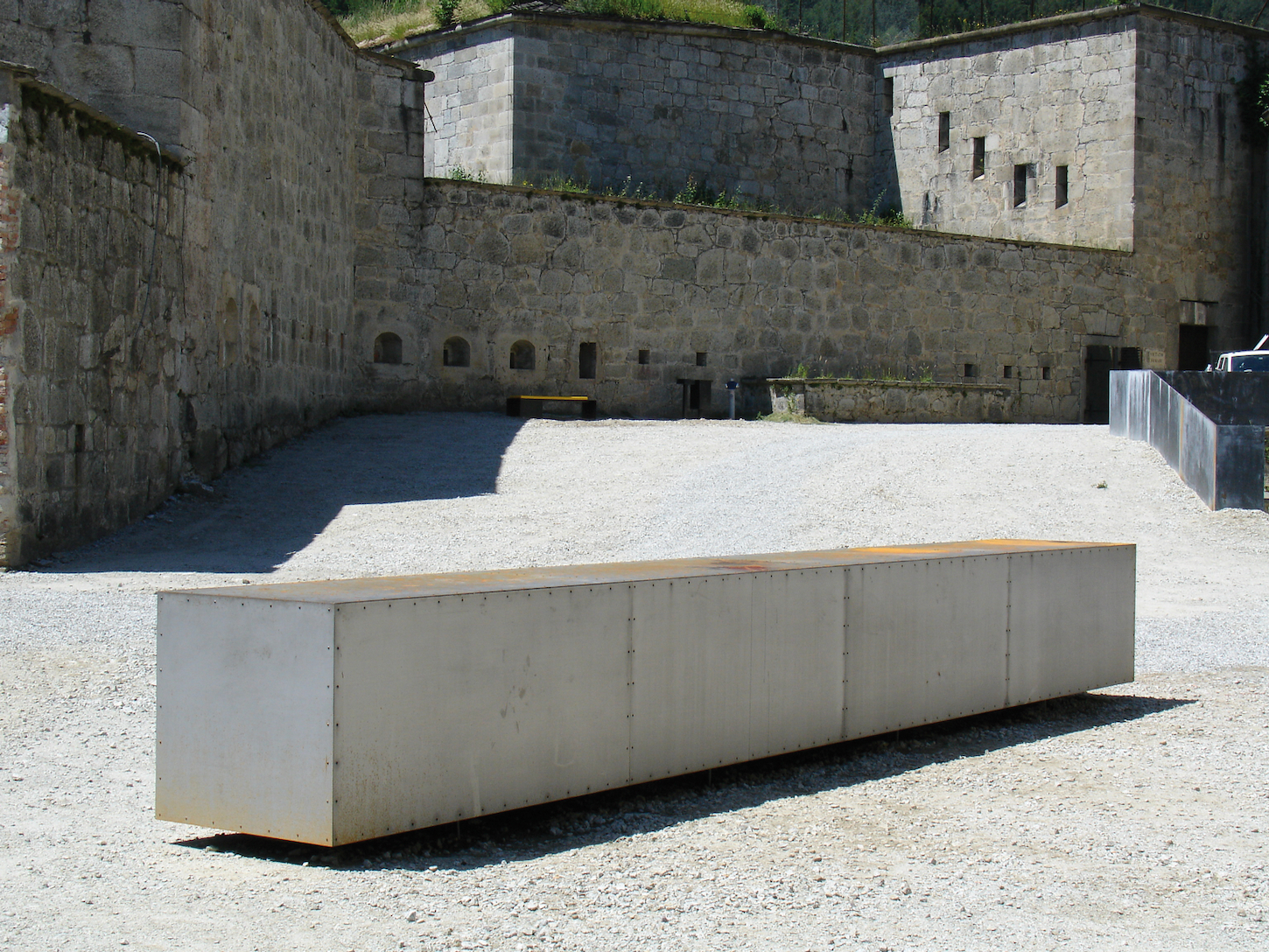
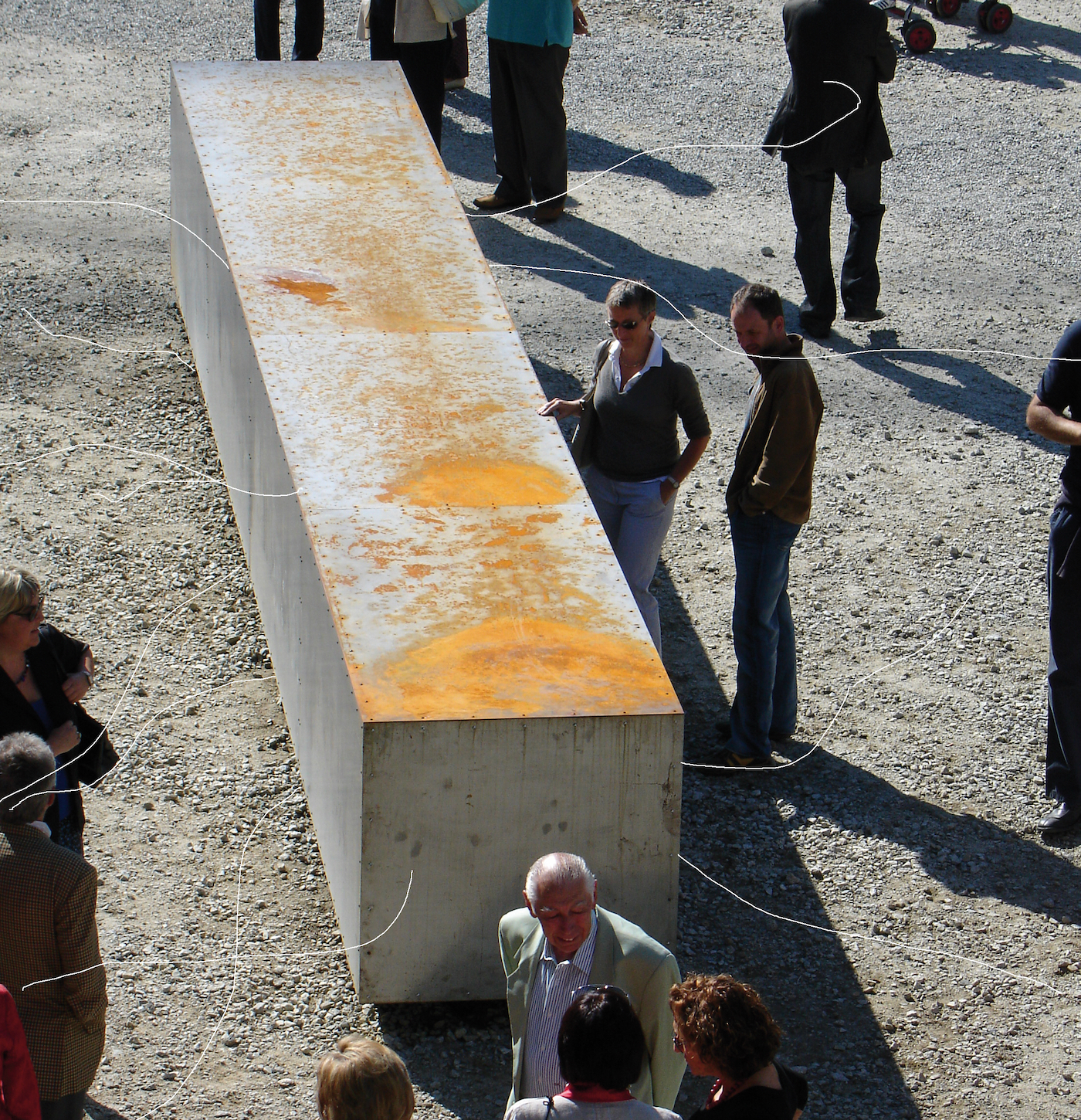
Through his sound sculptures and media art, Timo Kahlen works with ephemeral phenomena: wind and steam, light and shadow, pixels and dust, as well as sound, noise, and vibration. In SWARM, he creates a site-specific, eight-channel sound sculpture made of steel, centred on the collective intelligence of bees. Installed within a 19th-century military fortress, the work drew visitors into the shifting sonic environment of a bee swarm. A calm, continuous buzzing emanating from the massive rectangular box gradually transformed into defensive agitation as audiences moved through the space, accompanied by strong vibrations transmitted through the steel ‘beehive’. Echoing the military architecture, the work enabled a multisensory experience of territoriality and threat through the embodied perspective of another species. SWARM challenges anthropocentric assumptions by revealing how human presence may be perceived as intrusion within a shared environment.
Sensing as a Relational Multispecies Practice
Across these diverse practices, sensing emerges as a relational process through which humans become attentive to other forms of life and to the ecological systems that support them. Rather than offering definitive answers to environmental crises, these artworks encourage us to notice subtle processes that ordinarily remain invisible. In doing so, they challenge deeply rooted assumptions about human exceptionalism and invite us to imagine ourselves as participants within living networks of mutual dependence.
As ecological instability continues to define our shared future, sensory art teaches us that environmental transformation may begin with perceptual transformation. Learning to sense differently—to listen more carefully, to slow down, to attend to invisible or neglected interdependent relationships—can become a form of ecological care. The artists’ turn to the more-than-human world becomes an invitation to reconsider how we inhabit the world: not above or apart from nature, but always already within it.
Featured Artists
Yussef Agbo-Ola — yussefagbo-ola.com
Jamie Pazmiño — jamie-pazmino.com
Mia Milgrom — miamilgrom.com
Cadine Navarro — cadinenavarro.com
Timo Kahlen — timo-kahlen.de
Project by Therme Art
Art Senses is created by Therme Art, an international cultural initiative advancing Therme Group’s mission to promote wellbeing. In close collaboration with Therme Group, whose expertise in innovative environments and wellbeing infrastructures informs the programme’s vision, Therme Art supports and develops artistic and cultural experiences that generate positive social impact.
In addition to funding, mentorship, visibility, technical resources and support, Therme Art offers the possibility for projects developed within Art Senses to be realised permanently at Therme Group’s facilities worldwide, extending the artistic dialogue from the studio and exhibition context into lived, public environments that embody the programme’s curatorial aims.