
Art Senses is a new mentorship programme exploring the sensory dimensions in artistic practice. Conceived by Therme Art, it supports works that engage the senses, alone or in combination, unlocking cross-modal pathways of perception and inspiring wellbeing and new ways of experiencing the world. Each edition of Art Senses explores a specific theme in the sensory field guided by an invited artist-mentor and distinguished jury, who offer curatorial insight, mentorship, and professional guidance.

The programme is founded on three core principles: wellbeing, which fosters sensory artistic practices that nurture mindfulness and environmental awareness; immersion, which encourages artworks that are designed to envelop audiences through multisensory, spatial, or participatory elements; and expanded communities, which extend cultural engagement beyond conventional artspaces.

Artists worldwide are invited to apply via our open call portal. From all submissions, three artists will be shortlisted and awarded an artist fee to develop a project proposal. One of them will be chosen as the Art Senses Artist of the Year, receiving a budget, mentorship, visibility, and resources to develop their project further.

Art Senses is developed by Therme Art, an international cultural initiative advancing Therme Group’s mission to promote wellbeing, in close collaboration with Therme Group, whose expertise in innovative technologies and wellbeing infrastructures shapes the programme’s vision.

2026 Edition: Sensing the Invisible

The 2026 edition of Art Senses explores how art can extend perception beyond the predominance of sight, embracing the full spectrum of our sensory experience. This focus highlights ephemeral, interactive, and time-based artworks that exist in the moment of encounter, reminding us that art is not only an object to observe, but a lived experience to inhabit, feel, and reflect upon. In an era saturated by visual stimuli and digital spectacle, this edition seeks artistic practices that cultivate balance across the sensorium, opening space for embodied, multisensory experiences.

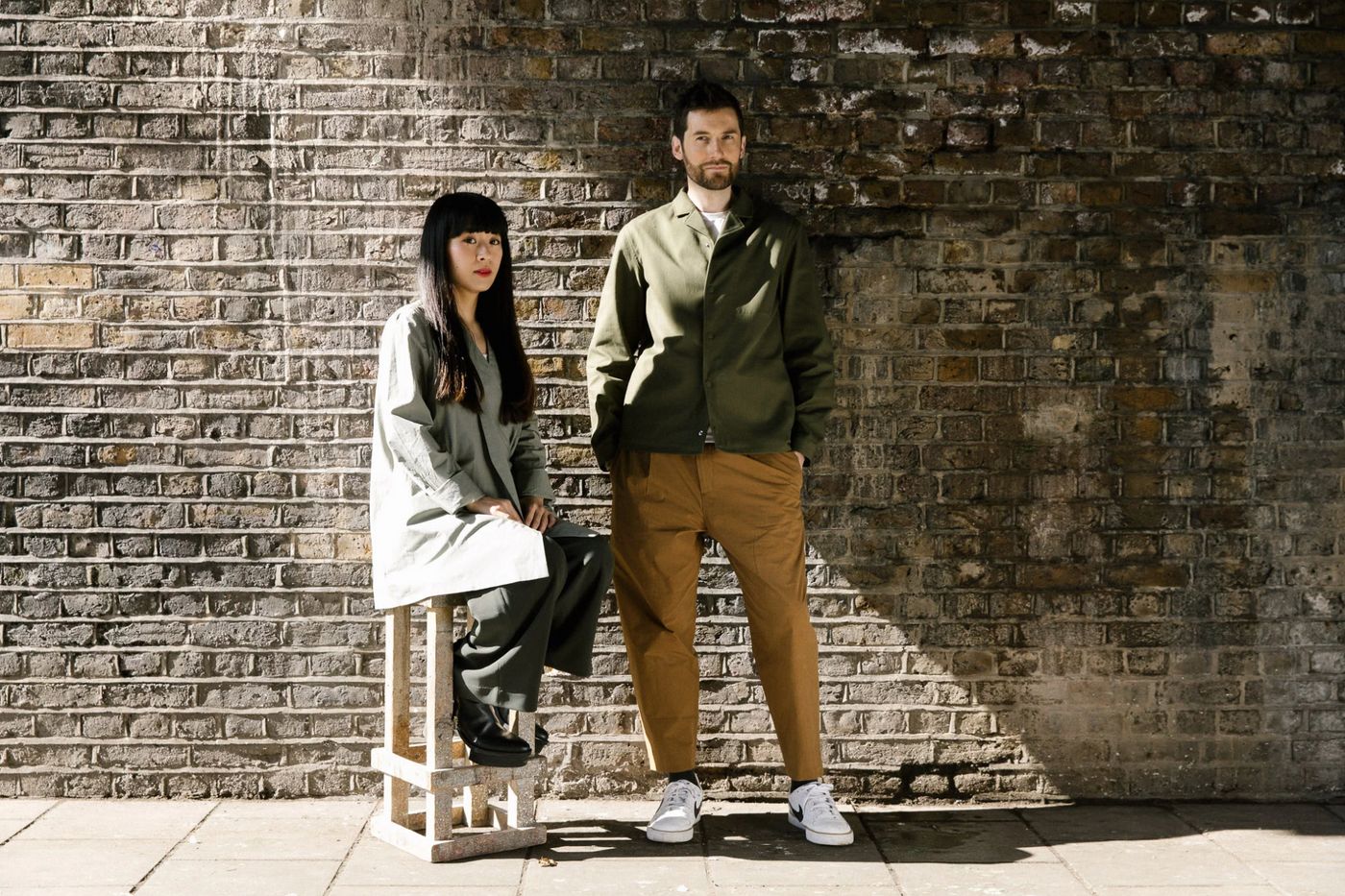
We are delighted to announce A.A.Murakami, Tokyo/London-based artist duo, as the 2026 mentor-artist. Renowned for their immersive sensory practice, their work heightens awareness of ephemeral phenomena and the invisible forces shaping perception, offering a lens through which to explore the multisensory and fleeting experiences.

Under the theme of Sensing the Invisible, Art Senses 2026 supports artists whose works uncover intangible forces by choreographing the senses into new constellations. Applicants are invited to expand their sensory vocabulary and investigate the ephemerality of light, sound, vibration, scent, air, or bodily interaction. This theme celebrates works that dissolve boundaries between the senses, between self and environment, and between the visible and the invisible.

It asks: How can artists give form to what is imperceptible to the eye, and in doing so, awaken us to both the fragility and the vitality of our embodied presence?

Art Senses Artist of the Year 2026:

Karola Braga

Conceptual rendering showing the suspended textile ceiling and reflective elements designed to emerge gradually through low-light adaptation.
Nocturnal bloom, pitanga, and jabuticaba — botanical references within the scent composition of Bloom of the Night.
Nocturnal rainforest landscape — ecological reference for the atmospheric environment of Bloom of the Night.
Conceptual rendering showing the suspended textile ceiling and reflective elements designed to emerge gradually through low-light adaptation.
Conceptual rendering by Karola Braga illustrating an olfactory distribution study of scent diffusion within the installation.
Conceptual rendering illustrating a sectional development study of the installation’s layered atmospheric system.
Conceptual rendering illustrating the entrance threshold and light-gradient corridor leading into the immersive installation.

Karola Braga has been selected as the Art Senses Artist of the Year 2026 for her proposal Bloom of the Night. Chosen by the jury and mentor through a rigorous international open call, Braga now enters a six-month mentorship with A.A.Murakami, receiving curatorial guidance, technical consultation, and dedicated resources to further develop the project’s atmospheric and sensory dimensions.

Bloom of the Night

Bloom of the Night explores how perception reorganises when atmosphere—rather than visual clarity—structures space. Instead of presenting an object to be observed, the installation unfolds as an environmental field experienced through attention, movement, and duration. As visual dominance recedes, smell, airflow, and subtle environmental shifts begin to define spatial understanding.

The work draws from the Guarani Mbya concept of desabrochar da noite—the “blooming” or unfolding of night—where night is understood not as absence, but as a temporal condition in which vitality becomes perceptible through scent, airflow, and vibration. Translating this understanding into an architectural setting, the installation creates a non-directional field where hierarchy dissolves and perception recalibrates gradually.

Olfaction operates as the primary temporal layer. A continuous humid earth accord establishes the atmospheric ground, from which intermittent presences emerge: dama da noite (nocturnal bloom), pitanga (acidic fruit), and jabuticaba in fermentation. Diffusion is calibrated to prevent saturation, allowing scent to behave as drift rather than signal. Low-velocity airflow carries scent and subtly activates suspended textile layers, while micro-reflective elements become perceptible only through sustained visual adaptation.

Conceived as a space of perceptual care, Bloom of the Night proposes wellbeing not as comfort, but as the capacity to remain present within uncertainty. By recalibrating atmosphere rather than adding spectacle, the work invites a mode of sensing grounded in duration, drift, and embodied orientation.

Proposal Development

During the Art Senses mentorship, Braga will shift her practice from scent as a localised event to scent as an integrated atmospheric system at architectural scale. Development will focus on olfactory and atmospheric prototyping, refining the compositional structure of the scent layers to ensure perceptual contrast and temporal differentiation.

Through iterative spatial calibration and environmental modelling, she will test airflow velocity, diffusion cycles, textile density, and low-light thresholds to establish stable atmospheric parameters. Computational airflow simulation and prototype-scale testing will support the integration of scent, light, and movement into a unified perceptual field.

The objective of the mentorship is not final construction, but the establishment of reliable environmental conditions that allow invisible forces—scent, airflow, light absorption—to become structurally perceptible in a scalable installation.

Shortlisted Artists
The following artists were shortlisted from over 600 international Open Call applications in recognition of the strength of their practices and proposals. Each received support to further develop their project during the shortlist phase of the Art Senses selection process.

Karola Braga
Bao Rong
Tanya Harris

This inaugural edition explores how art extends perception beyond the dominance of sight, embracing the full spectrum of our sensory existence.

A.A.Murakami

Meet the Mentor

The invited mentor provides curatorial direction and six months of dedicated mentorship to the Art Senses Artist of the Year, supporting both project development and professional growth.

A.A.Murakami is a Tokyo/London-based artist duo renowned for their innovative sensory installations. Pioneers of Ephemeral Tech, they merge science, technology, and art into experiences that invite reflection, contemplation and fleeting awareness.  

They create bespoke systems that give ephemeral form to intangible forces, summoning bubbles, fog rings, and clouds of scent that last only moments. These experiences heighten awareness of time’s passage and the fragile beauty of nature, offering spaces of reflection rather than spectacle. Works such as New Spring, Infinity Blue, and Beyond the Horizon embody this vision, inviting mindfulness and a renewed sensitivity to the environment. Extending the lineage of the Light and Space movement, their practice transforms plasma, mist, and vapor into active participants in the sensory field, blending natural science with aesthetic experience.

A.A.Murakami’s art is held in the permanent collections of MoMA, NewYork; Centre Pompidou, Paris; and M+, Hong Kong, with solo shows at M+, Hong Kong (2024) and the Museum of Fine Arts, Houston (2025), and exhibitions at Copenhagen Contemporary (2025), Leeum Museum, Seoul (2023), Grand Palais, Paris (2025), Triennale Milano (2023), and Kunstpalast, Germany (2021). Alongside their art practice, their design studio Studio Swine has pioneered innovations in material futures and process design, fostering dialogue between culture, sustainability, and innovation.

Introduction of A.A.Murakami for Floating World, 2025 at the Museum of Fine Arts, Houston

Beyond the Horizon, 2024. Installation views from A.A. Murakami: Floating World, commissioned by M+. © A.A.Murakami. Photo: Adam Kovár and PETR&Co.

Beyond the Horizon, 2024. Installation views from A.A. Murakami: Floating World, commissioned by M+. © A.A.Murakami. Photo: Adam Kovár and PETR&Co.

Beyond the Horizon, 2024. Installation views from A.A.Murakami: Floating World, commissioned by M+. © A.A.Murakami. Photo: Adam Kovár and PETR&Co.

Beyond the Horizon, 2024. On view in A.A.Murakami: Floating World, commissioned by M+. © A.A.Murakami.

Infinity Blue, 2018. Presented at Eden Project, Cornwall in the UK © A.A.Murakami.

New Spring, 2017. COS × Studio Swine, presented at Salone del Mobile. © A.A.Murakami.

New Spring, 2017. COS × Studio Swine, presented at Salone del Mobile. © A.A.Murakami.

The Cave, 2025. Presented by Kia Design at Opposites United, Milan Design Week. © A.A.Murakami.

The Cave, 2025. Presented by Kia Design at Opposites United, Milan Design Week. © A.A.Murakami.

The Cave, 2025. Presented by Kia Design at Opposites United, Milan Design Week. © A.A.Murakami.

The Cave, 2025. Presented by Kia Design at Opposites United, Milan Design Week. © A.A.Murakami.

Under a Flowing Field, 2023. Presented at Hyundai Motor Studio, Busan, South Korea. © A.A.Murakami.

"Art Senses is a fantastic opportunity for artists to throw us back into our bodies, throw us back into our other senses, provide opportunities for new experiences and moments of contemplation that are maybe missing."

— A.A.Murakami

A panel of distinguished experts forms the Art Senses jury, guiding the selection process and offering advice to support the creative and professional growth of participating artists. Below, the jurors share insights into how the 2026 shortlist was shaped.

Perspectives on Sensory Art Practices

Perspectives on Sensory Art Practices

During the selection process for the Art Senses Artist of the Year 2026, the four jurors⁠ convened in January 2026 in Munich for an intimate roundtable discussion in which they explored the recent turn towards multisensory art and the implications of this shift for the future of art institutions and exhibition-making, as well as the role of mentorship for artists creating in this uncharted territory. This feature brings together an edited reflection of their exchange alongside a series of short videos, each exploring a central theme of the conversation.

Tino Sehgal
Artist
Jane Withers
Curator
Marc Spiegler
Cultural Strategist
Fatoş Üstek
Curator & Writer
Through the open call, artists are invited to apply, with shortlisted participants and the Art Senses Artist of the Year receiving dedicated support and benefits outlined below.
Applications are now closed. 
Who can apply
Artists working across all mediums and disciplines

Participants must be 18 years or older at the time of submission

Artists from all nationalities, based anywhere globally, are welcome to apply (subject to applicable laws)  

Applications are open to individual artists as well as collectives

Note: Collectives will be considered a single applicant, and all benefits, requirements, and regulations will apply per application.
How to apply
Artists are invited to submit a CV, portfolio, and letter of interest responding to the edition’s curatorial theme: Sensing the Invisible.

From all submissions, three artists will be shortlisted by the jury. These shortlisted artists will receive support to refine their proposals before the final selection of Art Senses Artist of the Year.

Please download the full Application Guidelines for detailed information.
Shortlisted artists receive
€1,000 artist fee to develop a project proposal

Consultation with the jury and mentor

Announcement on Therme Art’s online platforms
The winning Art Senses Artist of the Year receives
€10,000 financial award as an artist fee and project development budget  

Up to six months of tailored remote mentorship with artist duo A.A.Murakami

Curatorial guidance from the jury

Technical and feasibility consultations from Therme Group experts  

International visibility through Therme Art’s online platforms

Opportunities to present the artistic outcome at Therme Art partner venues

Possibility to realise the project as a permanent site-specific artwork with Therme Art

Consult the FAQs for more information.

Art Senses unfolds through a step-by-step process, beginning with the Open Call and culminating in the Mentorship period.
November 2025:

Open Call Begins Open call applications begin on 1 November 2025. Artists are invited to submit a CV, portfolio, and letter of interest responding to the edition’s curatorial theme: Sensing the Invisible.

December 2025:

Open Call Closes Applications close on 1 December 2025.

January 2026:

Shortlist Announcement On 16 January 2026, the jury selects three shortlisted artists. Each receives a €1,000 budget and six weeks to develop a project proposal aligned with the curatorial theme.

February 2026:

Project proposal submission deadline Shortlisted artists must submit their project proposal by 27 February 2026.

11 March 2026:

Winner Announcement On 11 March 2026, one artist is named the Artist of the Year, chosen through a joint decision by the jury and mentor.

April 2026:

Mentorship Starts The selected artist enters the mentorship programme, working closely with A.A. Murakami to further develop their submitted proposal into a realisable concept.

August 2026:

Mentorship Ends: Mentorship period ends on 31 August 2026.

Final Project Presentation: The final work will be presented through Therme Art’s channels and partner venues, with the format tailored to the artistic outcome.

Art Senses unfolds through a step-by-step process, beginning with the open call and culminating in the mentorship period.

Open Call Opens

27.10.2025

Content One Heading

Artists are invited to submit a CV, portfolio, and letter of interest responding to the edition’s curatorial theme: Sensing the Invisible.

Open Call Closes

05.12.2025

Content Two Heading

Applications close.

Shortlist Announcement

16.01.2026

Content Three Heading

The jury selects three shortlisted artists. Each receives a €1,000 budget and six weeks to develop a project proposal aligned with the curatorial theme.

Project Proposal Submission Deadline

27.02.2026

Content Four Heading

Shortlisted artists submit their project proposal.

Art Senses Artist of the Year Announcement

11.03.2026

Content Four Heading

One artist is named the Art Senses Artist of the Year, chosen through a joint decision by the jury and mentor.

Mentorship Starts

01.04.2026

Content Four Heading

The Art Senses Artist of the Year enters the mentorship programme, working closely with artist duo A.A. Murakami to further develop their proposal.

Mentorship Ends

01.10.2026

Content Four Heading

Mentorship period ends.

Final Project Presentation

Content Four Heading

The final artistic outcome will be showcased through Therme Art’s channels and partner venues, with Therme curating presentation opportunities that best align with the nature and intent of the work.

FAQs

1
.
Who can apply?
icon-icon-
2
.
Do I need to be based in a specific location?
icon-icon-
3
.
Can I apply if I'm a student or recent graduate?
icon-icon-
4
.
Can I apply if my practice is design-led?
icon-icon-
5
.
Can I submit a collaborative work?
icon-icon-
6
.
Can I submit both an individual project and a collaborative project?
icon-icon-
7
.
Is AI-generated work allowed?
icon-icon-
8
.
What if my project involves scent or other ephemeral elements that are difficult to document?
icon-icon-
9
.
How can I increase my chances of being selected?
icon-icon-
10
.
What language should I submit my application in?
icon-icon-
11
.
How are applications reviewed?
icon-icon-
12
.
Will I receive feedback on my application if not selected?
icon-icon-
13
.
What is expected during the shortlisting stage?
icon-icon-
14
.
How is the Art Senses Artist of the Year selected from the shortlisted artists?
icon-icon-
15
.
What will the mentoring process look like?
icon-icon-
16
.
What can the €10,000 award be used for?
icon-icon-
17
.
Will the winning project be produced or exhibited?
icon-icon-
18
.
Do artists retain rights to their work?
icon-icon-
19
.
Will technical expertise support be available?
icon-icon-
20
.
Can my project be considered for a site-specific commission for a Therme facility?
icon-icon-
21
.
Does the winning project have to be fully produced/realized?
icon-icon-
22
.
Is Art Senses a recurring programme?
icon-icon-
23
.
Can I reapply if my previous application was not selected?
icon-icon-
24
.
Can I contact Therme Art with questions?
icon-icon-
25
.
How can I stay informed about future editions of Art Senses?
icon-icon-

[Close]

Tino Sehgal

Artist

Tino Sehgal is a Berlin-based artist whose work explores the immaterial, staging live “constructed situations” that engage visitors through movement, dialogue, and interaction rather than material objects. Trained in political economy and choreography, Sehgal’s works, such as Kiss (2002) and This Situation (2007), invite active participation and reflection on social and philosophical themes. Sehgal has presented at major institutions worldwide, including the Tate Modern, Guggenheim, and Stedelijk Museum, and represented Germany at the Venice Biennale in 2005. In 2013 he was awarded the Golden Lion for Best Artist at the Biennale.


[Close]

Jane Withers

Curator

Jane Withers is a leading curator, writer, consultant, and Director of Jane Withers Studio. The research-based practice has a particular interest in environmental issues and inspiring change through design, and has curated exhibitions and public programmes at museums and institutions including the V&A Museum, the Royal Academy of Arts, MK&G Hamburg and MAK Vienna, among many others. Jane teaches and lectures internationally, has served on numerous juries and advisory boards, and has been published widely. She was awarded an honorary fellowship by the University of Westminster for services to the environment and received Milan’s Design Prize for Experimentation.


[Close]

Marc Spiegler

Cultural Strategist

Marc Spiegler is a cultural strategist working at the intersection of art, technology, performance, and cultural brand strategy. He is President of Superblue’s Board, Chairman of the Advisory Board for Hamburg’s forthcoming Digital Art Museum, and serves on Sanlorenzo’s Comitato Scientifico for Venice’s new Casa Sanlorenzo. Beyond the visual arts, he collaborates with Wu Tsang’s Moved by the Motion, Trajal Harrell’s Zurich Dance Ensemble, and Transmoderna, bringing together electronic music and digital art. A visiting professor at Bocconi University since 2016, he also writes the Arts Radar column for Business of Fashion. From 2012 to 2022, Spiegler directed Art Basel, having first joined as co-director in 2007 after a 15-year career in journalism. He has served on the Therme Arts Advisory Board since 2019.


[Close]

Fatoş Üstek

Curator & Writer

Fatoş Üstek is a curator, writer, and cultural leader, currently developing a new institution inspired by the ideas in her acclaimed book, The Art Institution of Tomorrow (2024). Formerly the director of two leading UK art institutions, she is the co-founder and Managing Director of FRANK Fair Artist Pay and curator of Frieze Sculpture, London. Üstek serves on numerous international award juries (Turner Prize 2020, Scottish Pavilion 2022, and Netherlands Pavilion 2022 & 2024 in Venice) and advisory boards (Urbane Kunstre Ruhr, Extra Extra Magazine) and advisory panels (Istanbul Modern Collection, Fourth Plinth, Jarman Award). She also mentors artists (Chanel Next Art Prize) and curators, and lectures internationally.


[Close]

Sign up to our newsletter for news and updates. You can unsubscribe any time.

Thank you! Your submission has been received!
Oops! Something went wrong while submitting the form.

[Close]

[Close]

Karola Braga

[Close]

Karola Braga is an artist and olfactory researcher whose practice investigates scent as a critical, poetic, and political medium. Drawing on the cultural history of smell and interdisciplinary sensory studies, her work explores olfaction as structure, gesture, and ancestral technology. Engaging with non-retinal strategies, material poetics, and experiential forms across modern and contemporary art, Braga creates installations using scent, smoke, and atmospheric compositions. Through these sensory environments, she positions the olfactory as a site of memory, embodiment, and imagination, challenging the visual dominance of contemporary art and opening space for alternative modes of perception. Learn more about her work:  www.karolabraga.com.

Bao Rong

[Close]

Bao Rong creates soft, inhabitable structures that blur the boundaries between body and architecture. Her practice invites visitors to enter, rest, or move through intimate environments that are at once comforting and subtly disorienting. Informed by phenomenology, affect theory, and feminist writings on interdependence and embodiment, Bao explores how softness can reveal invisible social, spatial, and emotional forces that shape behaviour and desire. Through these tactile, spatial works, she examines vulnerability, care, and control, transforming sensory experience into a means of encountering the fragile threshold between protection and constraint. Learn more about her work: www.baorongstudio.com.

Tanya Harris

[Close]

Tanya Harris is a multidisciplinary artist whose practice explores vibration as a subtle yet fundamental force shaping lived experience. Working across interactive installations, participatory formats, ambisonic environments, scent, textiles, performance, and hand-built devices, her work invites heightened sensory awareness and collective resonance. Rooted in an expanded understanding of perception and embodiment, Harris creates immersive situations that function as spaces of connection, reflection, and transformation. Her practice centres on the unseen dynamics of energy and vibration, offering participants opportunities to experience shifts in perception at both individual and collective levels. Learn more about her work: www.tanya-harris.com.

[Close]

Perspectives on Sensory Art Practices

A Roundtable Discussion with Art Senses Artist of the Year 2026 Jury

Arising from the intersection of wellness culture and contemporary art, Therme Art’s first edition of the Art Senses mentorship programme reflects a growing shift towards artistic practices that extend beyond the visual. Centered on the theme Sensing the Invisible in its inaugural edition, the project brings together artistic practices that engage sensory modalities often underrepresented in the art world.

During the selection process for the Art Senses Artist of the Year 2026, the four jurors⁠—Fatoş Üstek, Tino Sehgal, Jane Withers, and Marc Spiegler⁠—convened in January 2026 in Munich for an intimate roundtable discussion. Together, they explored the recent turn towards multisensory art and the implications of this shift for the future of art institutions and exhibition-making, as well as the role of mentorship for artists creating in this uncharted territory.

Expanding the Fields of Art Practice and Presentation

Counting over 600 applications, the scale and diversity of submissions for the Art Senses Artist of the Year 2026 open call point to a widespread interest in multisensory artistic experimentation. Such practices are no longer marginal but are increasingly central to contemporary artistic inquiry. At the same time, as Withers observes, some of the most interesting proposals that “messed with the senses” emerge at the edges of established disciplines. They exist outside traditional institutional frameworks, appearing in public spaces or embedded in everyday environments.

Spiegler situates this shift within a broader expansion of artistic production, noting how applicants who work outside of painting and sculpture⁠—the dominance of which is closely tied to art market dynamics—also frequently explore disciplines outside of art. In doing so, they are not only redefining how art is created but also challenging assumptions about how art engages the senses, whether through translation into visual form or through fully immersive experiences.

Institutions have been slower to adapt to the rise of sensory art, Sehgal notes, as they continue to operate within a largely modernist paradigm. Audiences may be increasingly curious about what lies beyond the visual, but the infrastructures of exhibition-making are still tied to practical constraints and entrenched habits. Üstek frames this as a broader institutional inertia. While artists are actively engaging multiple senses or involving a “polyphony of mediums and resources”, institutions often lack the technical capacity and narrative frameworks to support such practices. They also require a rethinking of established protocols⁠ that would enable different ways of presenting, activating, and engaging with the work.

Reclaiming the Senses

Underlying these developments is a deeper reconsideration of the role of the senses in shaping human experience. Sehgal situates this within a longer historical trajectory, noting that institutions in the Northwestern hemisphere have privileged vision as part of a broader emphasis on rationality. Museums and theatres became “viewing machines”, reinforcing the subject-object divide. Multisensory practices, by contrast, foreground embodiment and relationality, pointing towards “an urge to arrive at a more complete understanding of what it means to be human”. Environmental concerns further fuel this turn towards the sensory. Withers notes that many of the applicants’ proposals incorporate elements such as temperature, wind, and atmosphere, situating the viewer as part of the natural world rather than presenting it as an object of observation.

This reorientation is particularly significant in the context of contemporary digital culture. As Spiegler observes, the proliferation of smartphones has transformed not only what we see but how we see, compressing spatial awareness and intensifying visual focus at close range. In this environment, art that engages multiple senses—or re-expands the field of vision—offers a means of disrupting habitual modes of attention and creating more immersive forms of experience.

Üstek connects the sensory shift of a “screen-oriented way of living” to broader questions of wellbeing. In a society increasingly shaped by screen-based interaction, encounters with texture, smell, and spatial variation can restore a sense of presence and bodily awareness. Multisensory art has the potential to counteract forms of disembodiment associated with digital life, fostering emotional engagement and shared experience.

Rethinking Relational Approaches

Within this evolving landscape, mentorship takes on renewed significance. As Sehgal reflects, mentorship is often shaped by close, formative relationships that support artistic development. Yet, as Spiegler notes, it is equally a reciprocal learning process. The beauty of generous, unstructured mentorship, he notes, is that “you have an enormous ripple effect without even being conscious of having thrown the stone in the water”. Üstek advocates for a non-hierarchical model and an open framework, emphasising mentorship as a shared space of inquiry and creative exchange. In this sense, mentorship mirrors the dynamics of multisensory practice itself: open-ended, relational, and exploratory.

The rise of multisensory art reflects a return to severed relationships⁠—with our senses, environments, and each other. As evidenced by the received submissions for this year’s Art Senses mentorship programme, there is “a growing understanding of art as a tool⁠—almost as respite, a sanctuary”, as Withers remarks. While institutions have yet to fully accommodate these emerging practices, the momentum behind them suggests that such adaptation is not only necessary but inevitable. As these changes continue to unfold, they may ultimately reshape how art is understood within and beyond the art world.

[Close]

[Close]

[Close]

[Close]